

Relative Energy Deficiency in Sport
Understanding RED-S: Why Proper Fueling Matters for Every Active Body
Relative Energy Deficiency in Sport, or RED-S, might sound like something that only affects elite athletes, but the reality is much broader. While the term originated in the sports world, RED-S is really about a simple but critical imbalance: not eating enough to support your body’s energy needs. This can affect anyone who is physically active or consistently expending more energy than they take in.
When we’re focused on the performance side of our activities, whether that’s training for a triathlon, hitting new PRs in the gym, or simply staying active, proper fueling can often be overlooked. But consuming enough food to support the energy our bodies use during movement is vital. When we fall short, we create an energy imbalance that can negatively impact both our overall health and our performance. Sometimes RED-S is driven by disordered eating, but it can also happen unintentionally when training volumes are high and we simply don’t realize we’re under-fueling.
Recognizing the Signs
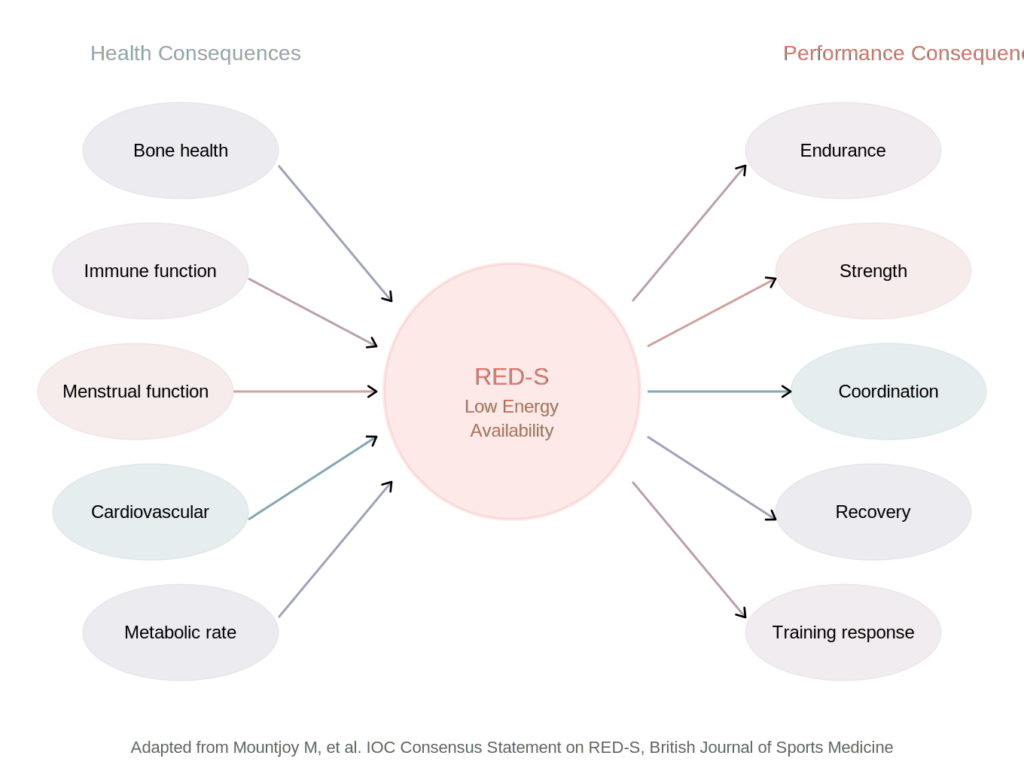
It’s important to watch out for signs of RED-S so it can be quickly addressed. You might notice a decrease in your strength and endurance. Workouts that used to feel manageable suddenly feel much harder. Stress fractures may become more frequent, and you might find yourself getting sick more often as your immune system struggles. Injury recovery can also be impaired, with muscles healing more slowly than they should. In severe cases, women can lose their menstrual cycles, which is a significant warning sign that the body is under stress.
RED-S doesn’t discriminate. It can affect people of any age, gender, body size, or background. The key is recognizing these patterns early.
How It Affects Performance
When our body is in an energy imbalance, our strength, endurance, and recovery all take a hit. You may feel more tired during exercise, find you can’t run as long as you used to, or notice that your weights feel heavier than normal. These aren’t signs that you’re getting weaker or losing fitness. They’re signals that your body isn’t getting the fuel it needs to support your training. Seeking help when you notice these signs is important, as they may indicate your body needs more energy to keep up with your activity level.
The Power of Adequate Fueling
Food is our best friend when it comes to supporting an active lifestyle, so it’s important that we’re eating nutrient-dense options throughout the day to help us feel our best. Aim for three meals a day, with snacks throughout to help maintain steady energy levels.
Energy-dense, nutritious foods like nuts, nut butters, milk or chocolate milk, and dried fruit can help support your training demands. Carbohydrates are especially key since they’re responsible for providing energy. Focus on starches like rice, pasta, bread, potatoes, and oats. And don’t forget to balance your plate with protein and fat sources at each meal to support overall health and recovery.
It’s also crucial to avoid overtraining. Remember to take days off from training for recovery. Having rest days while eating enough will actually speed up your recovery and help you come back stronger.
Resources and Support
If you’re concerned about RED-S or want to learn more:
•National rating disorders – Relative energy deficiency in sports RED-S
• Boston Children’s hospital – RED-S Conditions and treatments